
The Nanny Tell-All: What Happened Inside the Sterling-Knox Household
A former nanny’s deposition reveals the intense, rule-bound reality behind the seemingly effortless Instagram aesthetic of A-list parents, specifically the chaotic Tuesday that finally broke the camel's back.

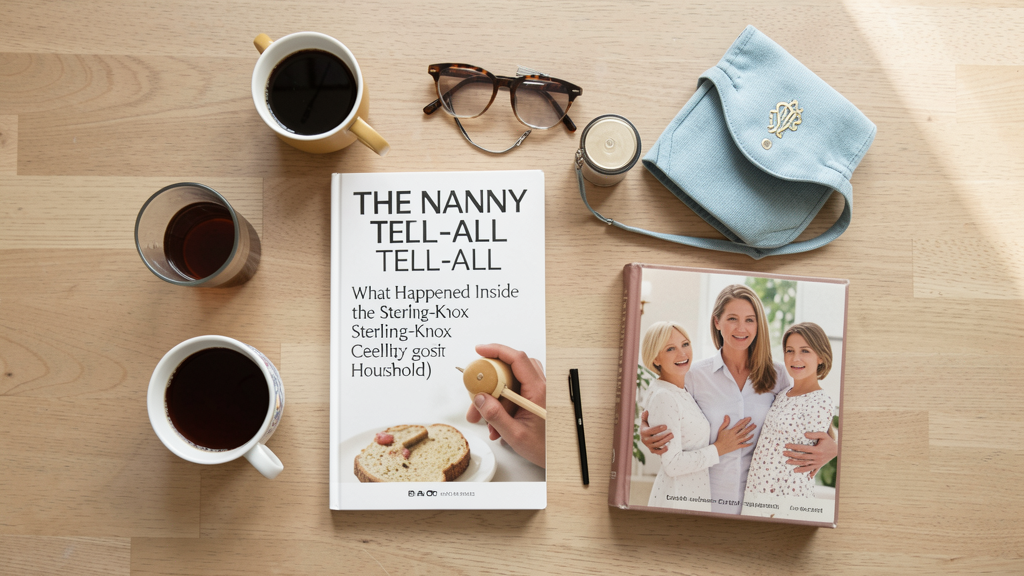
On March 3rd, 2026, Elara Sterling-Knox posted a carousel to her 45 million followers captioned "Slow Living with my loves." The photos showed her in a cream linen set, barefoot on pristine marble floors, her two toddlers constructing a block tower in soft focus. It looked like serenity. It looked like the ultimate parenting goal.
Four days later, a resignation letter dated March 7th from a former head nanny, leaked to The Daily Chronicle, told a story of military-grade logistics, sleep deprivation, and a bizarre set of household bylaws that prioritized aesthetic over affection. The 14-page document, which became part of a sealed legal filing regarding unfair labor practices, offers a rare, unvarnished look at the machinery required to manufacture "effortless" celebrity family life.
The narrative of the Sterling-Knox household is not just about wealth; it is about the extreme commodification of domesticity. The testimony describes a home where the children are the stars of a reality show that never airs, and where the staff are merely crew members expected to remain invisible while managing the chaos.
The Handbook: Silence, Starch, and Schedules
The former employee, identified only as "Nanny X" in the court documents to protect privacy, detailed the "Parenting Protocol" handed to her on her first day. It wasn't a list of allergies or bedtime preferences. It was a forty-page manual governing everything from the precise starch percentage in the children's collars (20%, never 100%, never 0%) to the approved decibel level of play in the east wing.
Section 4, Paragraph B explicitly forbade staff from making eye contact with Julian Sterling-Knox before he had consumed his morning matcha. "The parent is not to be engaged with until the 'Green Light' status is updated on the household app," the document read. This level of detachment isn't just eccentric; it creates a fractured environment where the adults raising the children are essentially ghosts.
The most alarming revelation, however, concerned the "flow" of the day. The children, aged three and five, were not allowed to eat with their parents on weekdays. Breakfast was served at 07:00 sharp by the night nurse, while the parents rose at 09:30 for a private "wellness hour." Lunch was a picnic on the lawn—supervised by two nannies—while the parents worked in their respective studios. Dinner was the only potential interaction time, yet the testimony states that in the six months Nanny X was employed, the parents joined the children for dinner exactly four times.
This segregation allows the parents to remain the "fun, weekend parents" in their children's eyes, while the nannies become the enforcers of discipline and routine. It is a transactional approach to bonding that experts argue creates attachment issues, reducing parents to occasional visitors in their own mansions.
When the "Brand" Overrides Reality
The friction between maintaining a curated image and the reality of raising young children came to a head on what the staff internally referred to as "The Tuesday Tantrum."
It was a rainy Tuesday in February. The five-year-old, refusing to wear the custom-made beige coat selected for that day's paparazzi walk to the art gallery, threw a tantrum. A normal parent might grab a different coat or skip the gallery. In the Sterling-Knox house, this triggered a chain of command. Elara was in the middle of a livestream for her skincare line and refused to be interrupted. Julian was on a conference call.
The solution, according to the testimony, was to delay the exit by three hours. Two nannies were tasked with "calming the talent" (the child) in the sensory deprivation room, while the social media manager frantically edited a caption to explain the delay. The child eventually cried himself to sleep, missed the gallery entirely, and woke up to find his parents had gone without him.
This incident perfectly illustrates the shielding vs. branding debate. While some celebrities aggressively shield their children, others, like the Sterling-Knoxes, seem to view them as props. When the prop malfunctions—has a bad day, refuses to cooperate—the schedule doesn't bend; the child is simply managed until they fit the frame again.
The Cost of the "Village"
We often hear celebrities say "it takes a village" when defending their use of nannies. There is nothing wrong with help. But the leaked documents suggest the Sterling-Knox village was less about support and more about displacement.
Nanny X described a rotating roster that prevented any consistent attachment. There was the Night Nurse (shift: 8 PM to 7 AM), the Day Nanny (7 AM to 7 PM), the Educational Specialist (weekends only), and the "Adventure Guide" (outings only). At one point in January, the children were in the care of six different nannies in a single week.
This high turnover wasn't an accident; it was policy. The manual suggested rotating staff "to prevent dependency." The psychological impact on toddlers who cannot form a secure bond with a primary caregiver is profound, yet it seems the parents feared a bonded nanny more than they feared an anxious child.
Moreover, the emotional labor fell entirely on the staff. When the children had nightmares, it was Nanny X who held them. When they learned to ride bikes, it was Nanny X who cheered. The parents then swept in for the "Instagram moment"—the hug, the kiss, the perfect family portrait—often blocking the nanny from the frame entirely. It is a stunt double arrangement for emotions.
The "Snap Back" Facade
The testimony also touched upon Elara’s postpartum journey following the birth of her second child in late 2025. While her social media feed celebrated her "natural return to form" and "holistic recovery," the behind-the-scenes reality was grueling.
Nanny X testified that Elara had a team of three postpartum doulas, a nutritionist, and a pilates trainer living in the guest house. The "snap back" was a full-time job managed by staff, allowing Elara to present the image of doing it all while actually doing very little of the physical or emotional lifting. This aligns with the broader industry myth regarding postpartum recovery for stars, where the "bounce back" is bought, not earned.
The pressure to maintain this facade trickled down. The household food was strictly macrobiotic and sugar-free. The Nanny X recalls an incident where a grandmother—Elara's own mother—tried to sneak the children a cookie, only to be reprimanded by the household nutritionist. The cookie was confiscated. The message was clear: the purity of the brand was more important than a small moment of joy with a grandparent.
The Breaking Point
Why did Nanny X leave? It wasn't the low pay relative to the hours, though she noted she earned less than the estate's gardener. It wasn't the strict rules, though she found them dehumanizing.
She resigned because she was asked to lie.
In March, the children were scheduled for a photoshoot with a major magazine. The night before, both children came down with a high fever. The parents, wanting to secure the cover story, pressured the medical team to administer fever reducers and insisted the shoot go on. Nanny X was instructed to tell the press and the on-set photographer that the children's flushed cheeks were due to "playing in the sun."
Refusing to participate in what she described as "endangering the health of minors for a cover," Nanny X tendered her resignation the next morning. That act of conscience was the catalyst for the leaks that have now exposed the operation.
The Illusion of Perfection
The Sterling-Knox case is a stark reminder that what we scroll past on our phones is a production, not a life. The domestic chaos exists in every home, celebrity or not. The difference is that most of us manage our messes ourselves. The ultra-wealthy outsource the management of the mess, and then outsource the cleanup of the mess, until the only thing left visible is the clean, white counter top.
This creates a dangerous precedent for "regular" parents who feel inadequate because their mornings aren't lit by ring lights and their toddlers don't match the furniture. The tragedy of the Nanny Tell-All isn't that rich people have help; it's that they are increasingly building households where the help is responsible for the humanity, and the parents are responsible only for the optics. We are witnessing a shift where family life is no longer a private experience of growth and struggle, but a content vertical to be optimized at all costs.
Read next

Shielding vs. Branding: The Kylie Jenner vs. Kristen Bell Approach
Analyzing the trade-offs between the massive revenue potential of Kylie Jenner's child-centric branding and the protective, long-term value of Kristen Bell's privacy-first strategy.

What Does a Roster of 6 Nannies Actually Do for One Celebrity Baby?
A breakdown of the specialized 24-hour security, dietary, and developmental shifts required to protect and raise a child under the intense scrutiny of A-list fame.